Where we work
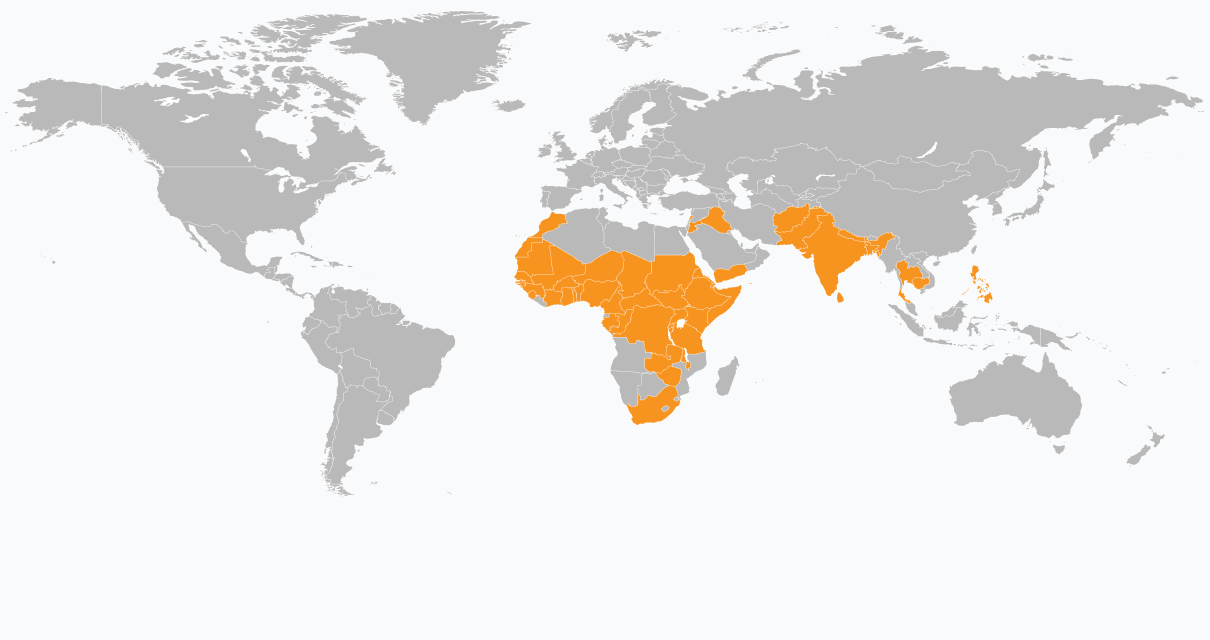
One mission. 53 countries.
From a single Mobile Clinic in Pakistan in 1989 to hospitals, mobile clinics, and classrooms across Africa and Asia. This is where your giving goes to work.
Since 1989
Reach that holds up.
Mobile camps. Permanent hospitals. Training colleges. School screenings. One geographic strategy.
Our footprint
Six on the map. Fifty-two in the record.
Permanent hospitals concentrate where the need is densest. Mobile camps extend our reach far past where buildings can follow.
Permanent infrastructure
Six countries where eye care stays.
Every hospital open every working day. Sorted by network size.
 Sudan
SudanOur largest network — flagship Makkah Eye Complex in Khartoum, operating since 1995.
Explore our work in Sudan Pakistan
Where it began — Al-Ibrahim, Karachi opened in 1990. Newest addition: Naseerabad, 2025.
Explore our work in Pakistan Bangladesh
Al-Noor Dhaka opened in 1994; now five hospitals across the country.
Explore our work in Bangladesh Yemen
YemenCare continuing through conflict — Mukalla, Aden, Marib and Jibla.
Explore our work in Yemen Nigeria
Makkah Eye Hospitals in Kano, Bauchi and Ibadan (newest, 2025).
Explore our work in Nigeria Niger
NigerMakkah Eye Hospital in Maradi, serving since 2009.
Explore our work in NigerFrom the field
What morning looks like.
By 7am, the courtyard at Al-Ibrahim Eye Hospital Karachi begins to fill. Some patients have come from Sindh. Some from Baluchistan. Some have been waiting since before dawn.
Surgery, consultation, glasses: all free, all year, all because someone, somewhere, gave.
The hospital opened in 1990. It has not closed since. Every working day, hundreds of patients come through these doors. Every working day, sight is restored to someone who could not afford to lose it.
Al-Ibrahim Eye Hospital, Karachi, Pakistan. Operating since 1990, 3.3M+ outpatient visits. 274,561 surgeries to date.
mobile eye treatment & surgery clinics
Where we visit, not just where we stay.
Beyond the six countries above, mobile eye treatment & surgery clinics have reached places eye care wouldn’t otherwise arrive. They cross borders to treat patients in villages too small, too remote, or too underserved for permanent infrastructure.
 Afghanistan
 Benin
Benin Burkina Faso
 Burundi
 Cambodia
 Cameroon
 Central African Republic
 Chad
Chad Comoros
 Congo
Congo Côte d’Ivoire
 Djibouti
 DR Congo
 Eritrea
 Ethiopia
 Gabon
Gabon Gambia
 Ghana
Ghana Guinea Bissau
 Guinea Conakry
 India
India Jordan
 Kenya
Kenya Iraq
Iraq Lebanon
 Malawi
 Maldives
 Mali
Mali Mauritania
 Morocco
 Nepal
Nepal Philippines
 Rwanda
 Senegal
 Sierra Leone
 Somalia
 South Africa
 South Sudan
 Sri Lanka
 Tanzania
 Thailand
 Togo
Togo Uganda
 Zambia
 Zimbabwe
How we choose
Why here.
We don’t pick countries. We pick places where the need, the access, and the partnerships line up.
01. NEED
Where preventable blindness is highest.
Cataracts and refractive error blind millions in regions where the cure is well-understood and the infrastructure isn’t. Our hospitals concentrate where these conditions are most common and least treated.
02. ACCESS
Where eye care is hardest to reach.
A working ophthalmology unit can be a six-hour drive, a passport, or a salary out of reach. We site permanent care where local options run out, and we run camps where even the hospital is too far.
03. PARTNERSHIP
Where local partners can sustain the work.
Every hospital is built with local health authorities and staffed by people from the country it serves. Three of our six hospital countries also host training colleges. The infrastructure stays because the people who run it do too.
Al Basar USA
Your gift travels with us.
501(c)(3) | Tax-deductible | Secure donation